

The Best Value Used Car Models by State


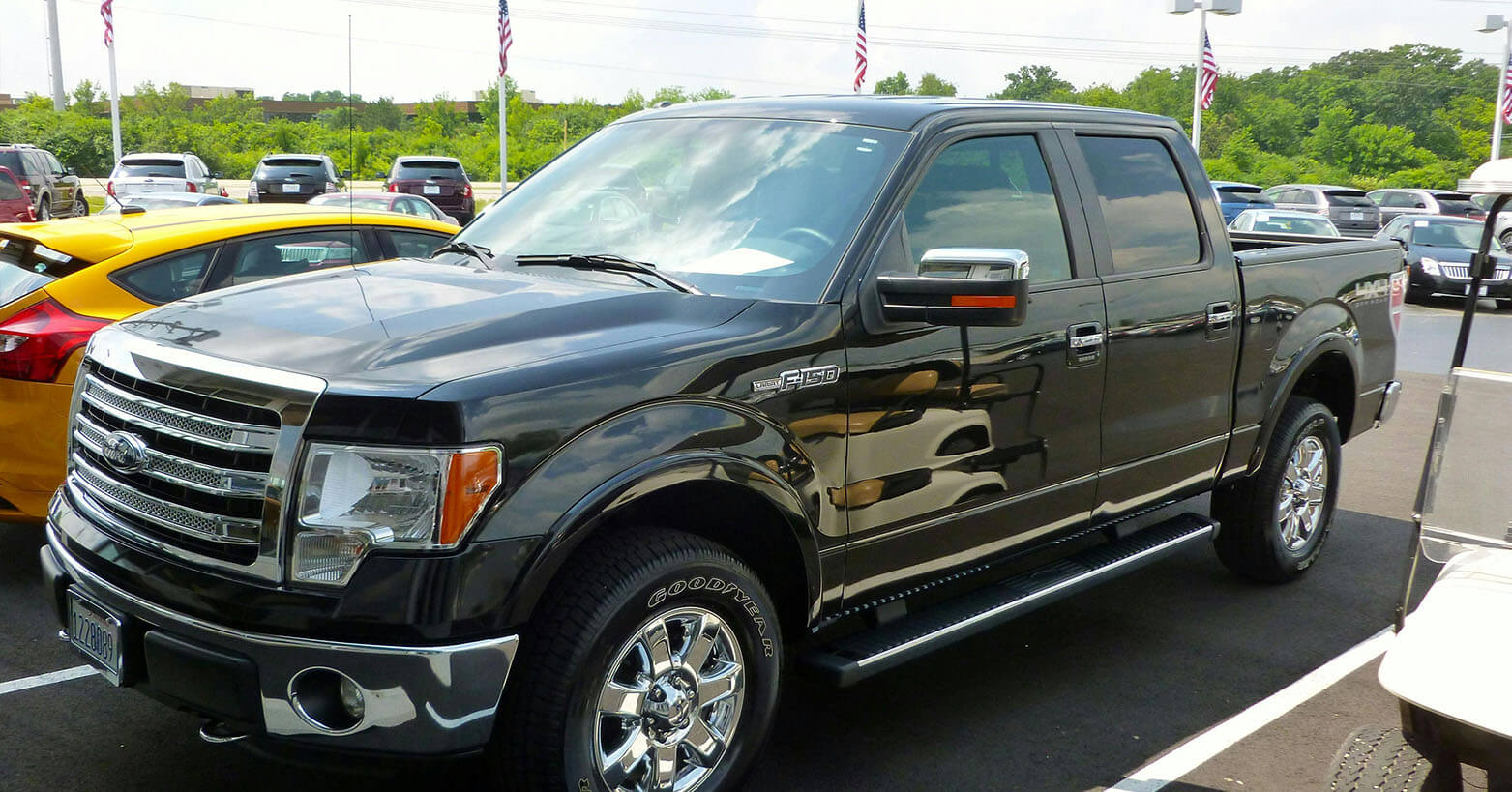
Choosing a used car over a new model is an excellent way to reduce monthly loan payments in the short term and depreciation losses when the time comes to sell. Insurance and taxes may be lower with a used car, and you widen the selection of models to choose from as higher-end vehicles fall into your price range.
But the rising cost of new cars — due to more complex designs, supply chain issues and tariffs — has had knock-on effects for America’s used car market. Since the overall costs of motoring have also risen by 40.59% in just five years, it is worth doing research to find the best bargain available.
To find how the best used car options differ from location to location, online lender NetCredit analyzed pricing across thousands of local used car listings for the most popular models. We compared like-for-like to identify the most affordable model to buy in each state and major city, relative to the national average price.
What We Did
We built a list of the 25 best-selling vehicles in 2025 and sourced listings from Cars.com for used models from the biggest cities in every state, isolating the data on car age, mileage, trim, traction and fuel type. Then, we used these variables alongside the car model and location to create an algorithm for each state and city to find the average, condition-adjusted price locally and nationally. Finally, we compared the local prices to the national average to find the price premium for each model in each location.
Key Findings: The least expensive used car model in each state.
- A used Ford F-150 is 12.24% cheaper than the national average in North Dakota, making it the best value model in any particular state.
- New York City’s best value used car is the Nissan Rogue, which is 17.94% cheaper than the national average for the same model.
- The best value used car model in LA is the Tesla Model 3, which is 7.68% cheaper than the national average.
A used F-150 is 12% cheaper in North Dakota.
First, we identified the best-value used car model in each state, compared to the average price for the same model across the U.S. In each case, we allowed for the age and condition of the listings we analyzed to deliver truly fair results.
We found that there are 16 states where you can save more than 5% against the national average price if you pick the right used car model, including three with savings of over 10%. The greatest saving of all at the state level is the purchase of a Ford F-150 in North Dakota, where the local average price is 12.24% lower than the national average. The F-Series is America’s most-sold car, and the Ford F-150 is the most-sold used car, accounting for 3.0% of all secondhand sales this year, according to a study from iSeeCars.
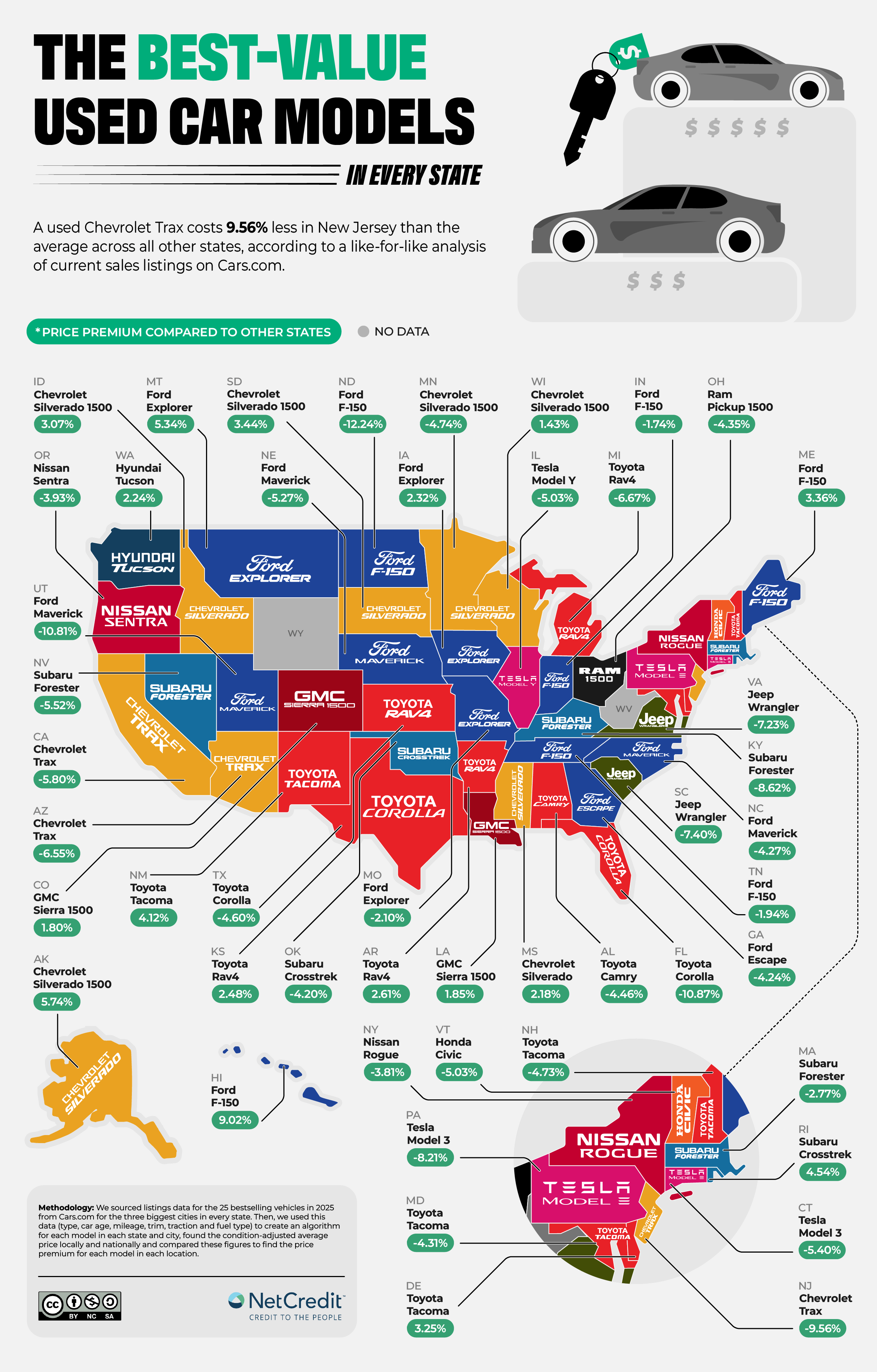
The other top savings can be found in Florida, where a used Toyota Corolla may cost 10.87% less than the national average, and Utah, where the best bargain is the Ford Maverick (-10.81%). The Corolla is reputedly the only car priced below $30,000 when new that is assembled entirely in the U.S. — potentially protecting used Corollas from the knock-on effects of tariffs.
However, we also identified 17 states where there is no popular used model that costs below the national average. The hardest place to find a good deal is Hawaii, where a used Ford F-150 costs 9.02% more than the national average but is still the model with the most favorable local price premium for buyers.
Tesla is the fastest depreciating used car — and the best value in Los Angeles and Philadelphia.
Next, we narrowed in on 17 major cities to find the best value used car models in each location. Of these cities, New York has the best price premium for any one model: a used Nissan Rogue costs 17.94% less than the national average in the Big Apple.
The U.S. is Nissan’s biggest market, with Americans buying more than a quarter of the Japanese manufacturer’s annual output. And the Rogue is the most popular Nissan in the U.S. “We’ve hit that sweet spot as an accessible brand,” explains Ponz Pandikuthira, Nissan USA’s head of product planning.
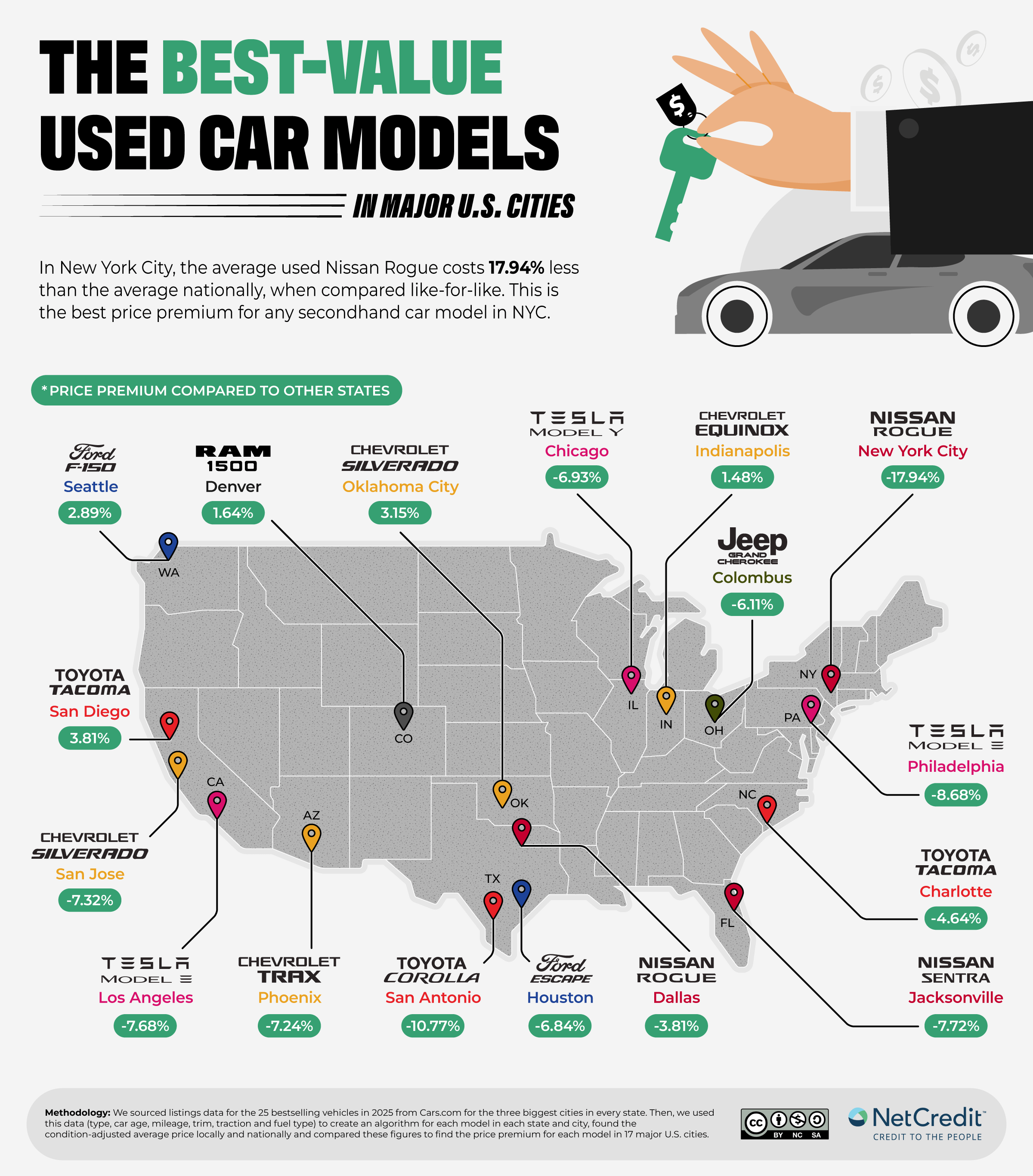
A used Tesla Model 3 is cheaper than the national average in Philadelphia (-8.68%) and Los Angeles (-7.68%), offering the best value on a used car in those cities. Tesla has become the fastest-depreciating make of used car, aided by the mass sell-off of Teslas as anti-Musk sentiment peaked during his time at DOGE, making it a buyer’s market and a good way into electric vehicles if you’re new to the post-gas age.
Where to find the cheapest top-used cars.
Finally, we identified the five cheapest states to buy the five best-selling used cars as, on average, some states have less expensive used cars than others. The Ford F-150 offers the most uneven savings at the top: a used one is, on average, 12.24% cheaper in North Dakota against the national average, whereas the savings in the remaining four cheapest states max out at 5.63%.
Savings on a Chevrolet Silverado 1500 are more modest, ranging from Illinois, which offers the fifth-best deal (3.34% less than average), to North Dakota, which offers America’s best deal on the Silverado (-6.66%).
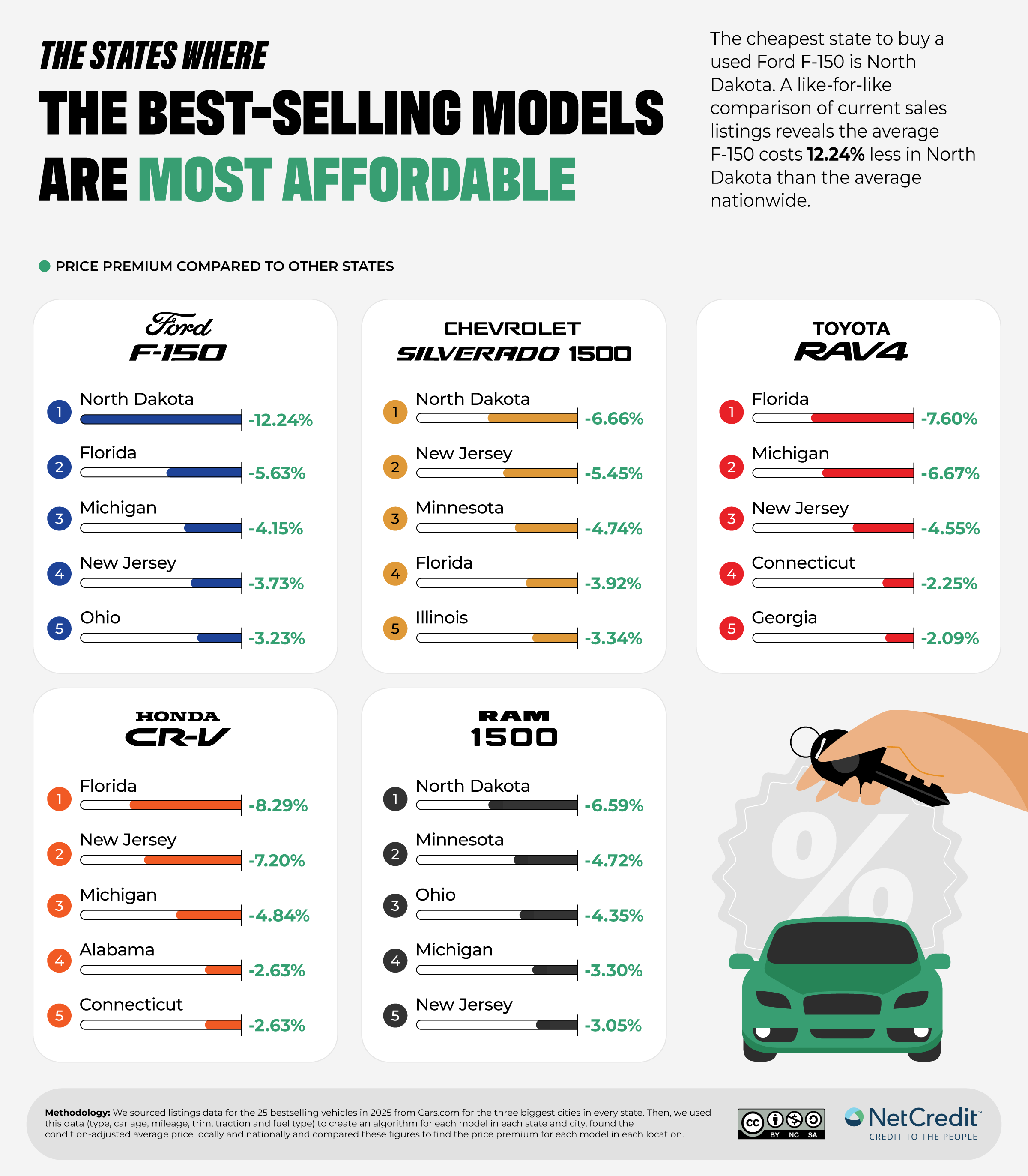
Indeed, North Dakota is the cheapest state for three of the five best-selling vehicles in America. Florida, New Jersey and Michigan are also good value markets across multiple used models.
The Honda CR-V is cheapest in Florida (-8.29%), New Jersey (-7.20%) and Michigan (-4.84%). The CR-V is also valued for its consistent and reasonable maintenance costs. This Honda’s unshowy dependability has contributed to increased sales during a period of uncertainty across the U.S.
How to save money on a used car.
As our research shows, the make and model of the used car you buy affects the savings you make, depending on where you make your purchase. But there are other ways to keep within your budget when buying a used car.
- Start your research online. While you may find a better deal in-store, it helps to get a sense of the market and pricing before you come face-to-face with a dealer.
- Read the forums. Some cars age better than others. Look out for common complaints about older models to see what extra costs you may incur after buying.
- Shop at the end of the month. Anecdotally, salespeople may be more likely to cut you a deal toward the end of the month as they attempt to reach their sales target.
- Get an insurance quote. When a used car price looks too good to be true, it could be because it has proven to be an insurance liability. Compare insurance costs across cars before choosing which model to buy.
- Trade in your existing car. Trading in your current car can reduce your financing needs and simplifies the selling process.
- Negotiate. Whether in a dealership or buying direct from a private seller, there may be wiggle room on the price — as long as you know how to negotiate it.
The cost of motoring may be rising, but like so many aspects of home economics, it is possible to save money with research and forethought.
Methodology
We built a seed list of the 25 best-selling vehicles in 2025:
Chevrolet Equinox, Chevrolet Trax, Ford Explorer, Ford F-150, Ford Maverick, Honda Civic, Honda CR-V, Hyundai Tucson, Jeep Grand Cherokee, Jeep Wrangler, Kia Sportage, Nissan Rogue, Ram Pickup 1500, Subaru Crosstrek, Subaru Forester, Tesla Model 3, Tesla Model Y, Toyota Camry, Toyota Corolla, Toyota Rav4 and Toyota Tacoma.
Using Cars.com, we compiled listings for these used car models from the three biggest cities in every state and cleaned the data to obtain the following information: Mileage, Car Age, Trim, Traction and Fuel Type.
Using these variables, alongside the car model and location, we created a regression model for each state and city, with the log of the price as the dependent variable.
We considered the coefficients of these regressions to be statistically significant when their p-values were below 0.1 and only reported results for car models with more than 15 listings per city and 20 per state.
(Note, West Virginia lacked sufficient models with statistically significant data to name a “best value” model.)
Data is correct as of September 2025.
DISCLAIMER: This content is for informational purposes only and should not be considered financial, investment, tax or legal advice.